How to Solve STAT 265 Assignments Involving Probability and Distribution Models

Claim Your Discount Today
Get 10% off on all Statistics homework at statisticshomeworkhelp.com! Whether it’s Probability, Regression Analysis, or Hypothesis Testing, our experts are ready to help you excel. Don’t miss out—grab this offer today! Our dedicated team ensures accurate solutions and timely delivery, boosting your grades and confidence. Hurry, this limited-time discount won’t last forever!
We Accept








- Understanding Sample Spaces, Events, and Set Notation in STAT 265
- Handling Conditional Probability and Independence Questions
- Why Discrete Random Variables Become a Major Turning Point
- Solving Continuous Random Variable Problems in STAT 265
- The Role of Mathematical Statistics in STAT 265 Assignments
- Why Calculus Background Matters in STAT 265
- Assignment Patterns Commonly Seen in STAT 265
- Preparing for Midterms and Final Exams in STAT 265
- How STAT 265 Supports Advanced Statistics and Machine Learning Courses
Students enrolled in STAT 265 at the University of Alberta quickly realize that the course is very different from introductory applied statistics subjects. STAT 265 is built around probability theory, random variables, mathematical distributions, expectation, variance, conditional probability, and formal statistical reasoning rather than spreadsheet-style descriptive analysis. Because of the mathematical depth involved, many students start searching for statistics homework help when assignments begin covering advanced probability models and theoretical derivations. The course is commonly associated with the probability and stochastic processes stream within the Department of Mathematical and Statistical Sciences.
One of the first challenges students face in STAT 265 is adapting to proof-oriented probability thinking. Earlier statistics courses often focus on interpreting graphs, calculating summary measures, or applying formulas directly to datasets. STAT 265 instead requires students to understand why probability rules work mathematically. Assignments frequently involve deriving probabilities from axioms, constructing sample spaces, analyzing conditional events, and manipulating algebraic probability expressions across multi-step problems. As the coursework becomes more analytical, students often look for help with probability homework to improve their understanding of mathematical probability concepts and structured derivations.
The transition becomes difficult because many STAT 265 questions combine calculus, set notation, algebraic manipulation, and probability laws simultaneously. Students may correctly understand the theoretical concept but still lose marks because of notation errors, incomplete derivations, or improper justification of assumptions. The course therefore demands both conceptual understanding and mathematical precision throughout assignments, quizzes, and examinations.
Understanding Sample Spaces, Events, and Set Notation in STAT 265
Early sections of STAT 265 focus heavily on probability foundations. Students are expected to work with events, complements, unions, intersections, mutually exclusive outcomes, and counting methods before moving into advanced probability models. Course materials associated with STAT 265 frequently include topics such as sample spaces, random experiments, discrete sample spaces, compound events, and event relations.
Many students initially underestimate this portion of the course because the notation appears simple. However, assignment questions rapidly become more abstract. Problems often require translating lengthy probability statements into symbolic mathematical form. A single question may involve conditional probability, independence assumptions, and inclusion-exclusion reasoning within one derivation.
Students also encounter difficulties when word problems contain hidden probability structures. For example, reliability systems, genetics scenarios, quality control problems, or card-selection experiments require students to identify event relationships independently before calculations even begin. Missing the event structure usually leads to incorrect probability expressions later in the solution.
In many STAT 265 assignments, instructors expect students to justify each transformation carefully rather than presenting only the final numeric answer. This makes mathematical communication an important grading factor. Organizing solutions step-by-step becomes essential because probability notation errors can propagate through the entire problem.
Handling Conditional Probability and Independence Questions
Conditional probability forms one of the central conceptual pillars in STAT 265. Students must move beyond memorizing formulas and instead understand how probability changes when additional information becomes available. Problems involving medical testing, reliability systems, manufacturing defects, and sequential experiments often require multiple layers of conditional reasoning.
Bayes’ theorem frequently becomes one of the most difficult topics because students must combine conditional structures with prior probabilities and total probability expansions. Many students struggle not because the formula itself is difficult, but because identifying the correct conditioning events requires careful interpretation.
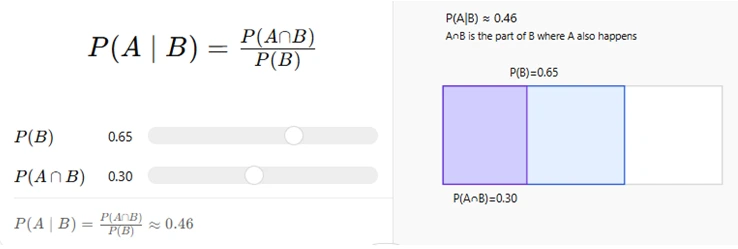
Assignments in STAT 265 commonly test whether students truly understand independence rather than simply recognizing textbook definitions. Questions may ask students to determine whether pairwise independence implies mutual independence or whether events remain independent under complements and unions. These problems require theoretical reasoning instead of direct computation.
Students pursuing machine learning, artificial intelligence, or stochastic modelling later in their degree often discover that STAT 265 provides the mathematical probability foundation for advanced computational methods. Discussions among University of Alberta students frequently describe STAT 265 and STAT 266 as significantly more mathematically useful for machine learning pathways than introductory applied statistics courses.
Why Discrete Random Variables Become a Major Turning Point
After foundational probability theory, STAT 265 transitions into random variables and probability distributions. This is where many students begin experiencing a significant increase in assignment complexity because problems shift from event-based reasoning toward function-based probability modelling.
Discrete random variables require students to construct probability mass functions, cumulative distribution functions, expected values, variances, and transformations. Questions are rarely isolated computations. Instead, assignments often combine multiple concepts together within modelling scenarios.
Students frequently encounter binomial, geometric, negative binomial, and Poisson distributions in problem sets. The challenge lies not only in applying formulas but also in identifying which probability model appropriately represents the experiment described in the question.
For instance, many assignment questions deliberately include subtle wording differences between “number of successes before failure,” “number of trials until success,” or “fixed number of trials.” Students who rely entirely on memorization often confuse distributions because the underlying experiment structure changes slightly.
Expectation and variance calculations also become progressively more algebraically demanding. Some STAT 265 questions require deriving expectations directly from definitions rather than applying pre-memorized formulas. This forces students to manipulate summation notation accurately while maintaining proper probability logic throughout the derivation.
Solving Continuous Random Variable Problems in STAT 265
Continuous distributions create another major conceptual adjustment because probability density functions behave differently from discrete probability models. Many students initially struggle with the idea that probabilities over single points become zero in continuous settings.
Assignments involving uniform, exponential, and normal distributions often integrate calculus into probability analysis. Students may need to determine normalization constants, evaluate integrals over intervals, derive cumulative distributions, or compute transformed densities.
The exponential distribution becomes especially important because it introduces memoryless behaviour within continuous probability models. Many STAT 265 questions test whether students understand the theoretical implications of memorylessness rather than merely substituting values into formulas.
f(x) = λe^(-λx), x > 0
Density function questions also create difficulty because students sometimes confuse probability density values with probabilities themselves. STAT 265 assignments often include conceptual traps where the density exceeds one or where students incorrectly interpret areas under curves.
The normal distribution section usually introduces approximation methods, standardization, and probability transformations. Students frequently lose marks because of rounding errors, incorrect z-score interpretation, or improper probability table usage.
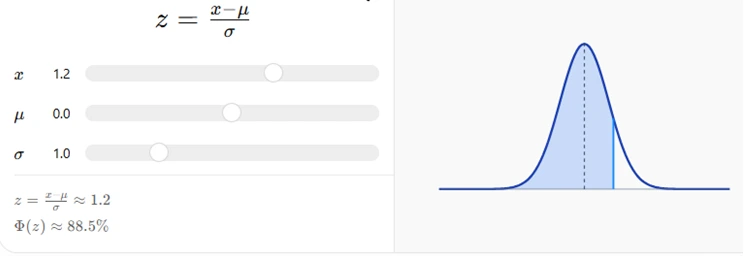
Because later courses in statistical inference and machine learning rely heavily on continuous probability models, difficulties in STAT 265 can affect future upper-level coursework substantially.
The Role of Mathematical Statistics in STAT 265 Assignments
Although STAT 265 focuses heavily on probability theory, many assignments already begin preparing students for mathematical statistics concepts developed further in STAT 266 and advanced inference courses. Students therefore encounter questions involving estimators, sampling behaviour, and distribution properties earlier than expected.
The course often requires students to derive moments, evaluate transformations, and analyze functions of random variables mathematically. This differs significantly from software-driven statistical analysis courses where technology performs most calculations automatically.
Students commonly report that STAT 265 assignments become time-consuming because each solution requires multiple pages of reasoning and derivation. Reddit discussions among University of Alberta students regularly describe the workload as mathematically intensive compared with introductory statistics subjects.
In many cases, students understand lecture examples but struggle independently when assignment problems combine several probability concepts together. A single question may involve conditional probability, expected value derivation, and distribution identification within one integrated scenario.
This creates difficulty because STAT 265 emphasizes analytical flexibility rather than repetitive procedural calculations. Students who only practice memorized textbook examples often struggle during examinations when questions are presented in unfamiliar formats.
Why Calculus Background Matters in STAT 265
STAT 265 is strongly connected with concurrent mathematical coursework, particularly calculus-based subjects. Student discussions frequently mention the sequencing relationship between STAT 265 and advanced mathematics courses such as MATH 214.
Many probability derivations require integration techniques, differentiation, infinite series manipulation, and algebraic transformations. Continuous distributions especially depend on calculus for normalization, expectation calculations, and transformation analysis.
Students without a strong calculus background often experience difficulties interpreting probability density functions conceptually. Even when they can perform integration mechanically, understanding why integrals represent probabilities requires mathematical maturity.
Assignments may also involve moment-generating functions, transformations of variables, or Jacobian-style reasoning in more advanced sections. These topics require careful symbolic manipulation and disciplined mathematical presentation.
Because of this integration between calculus and probability, STAT 265 frequently feels more like a mathematics course than a traditional statistics course. Many students entering from applied statistics backgrounds are surprised by the level of theoretical reasoning required throughout the semester.
Assignment Patterns Commonly Seen in STAT 265
Assignments in STAT 265 often follow recurring structural patterns. One common format involves proving theoretical probability properties using formal definitions and algebraic manipulations. Another common structure involves modelling real-world systems probabilistically before deriving analytical solutions.
Students may encounter reliability analysis problems involving system failure probabilities, queueing-style waiting time models, or manufacturing defect probabilities requiring conditional reasoning. These problems test conceptual modelling skills in addition to mathematical calculations.
Another recurring assignment style involves deriving distributions from transformations of random variables. Students may need to determine the distribution of sums, products, minima, maxima, or scaled variables. These questions often become algebraically demanding because students must carefully track support intervals and density transformations.
Another recurring assignment style involves deriving distributions from transformations of random variables. Students may need to determine the distribution of sums, products, minima, maxima, or scaled variables. These questions often become algebraically demanding because students must carefully track support intervals and density transformations.
Discrete approximation questions also appear regularly. Students are frequently expected to justify why a Poisson approximation or normal approximation is appropriate under specific conditions. This requires conceptual understanding of limiting behaviour rather than simple formula substitution.
Many students also struggle with notation-heavy derivations involving sigma notation, factorials, combinatorial coefficients, and cumulative probability expansions. Without organized mathematical writing, even correct reasoning can become difficult to follow during grading.
Preparing for Midterms and Final Exams in STAT 265
One of the biggest difficulties in STAT 265 examinations is time management. Since solutions require derivations rather than short computational answers, students often spend too much time on algebraic simplification or notation corrections.
Historical STAT 265 course pages include references to challenge problems, assignments, midterm examinations, and mathematical writing expectations. This reflects the analytical structure of the course, where mathematical communication plays a major role in assessment performance.
Students preparing effectively for STAT 265 usually focus on pattern recognition across probability models rather than memorizing isolated formulas. Because examination questions frequently combine topics, understanding relationships between concepts becomes more important than memorization alone.
Many students also underestimate the importance of practicing complete written derivations under timed conditions. Reading solutions passively rarely develops the problem-solving fluency necessary for upper-level probability examinations.
Theoretical probability questions often contain hidden assumptions or notation subtleties that only become visible through extensive independent practice. Students who consistently rewrite full solutions instead of reviewing summaries generally perform better in derivation-based sections.
How STAT 265 Supports Advanced Statistics and Machine Learning Courses
STAT 265 serves as an important prerequisite foundation for higher-level probability, mathematical statistics, stochastic processes, statistical inference, and machine learning coursework at the University of Alberta. The Department of Mathematical and Statistical Sciences lists STAT 265 within the probability and stochastic processes pathway.
Students moving into data science, actuarial science, economics, artificial intelligence, or advanced statistical modelling frequently rely on concepts first introduced in STAT 265. Topics such as expectation, variance, conditional probability, distribution theory, and stochastic modelling appear repeatedly in later analytical coursework.
Reddit discussions among students often emphasize that STAT 265 provides stronger theoretical preparation for machine learning and advanced quantitative subjects than introductory applied statistics alternatives.
Because of this long-term importance, many students seek structured support for assignments involving probability derivations, random variable modelling, statistical distributions, and mathematical proofs. Difficulties in STAT 265 rarely come from one isolated chapter. Instead, the challenge comes from integrating multiple mathematical ideas into complete analytical solutions while maintaining precise probability reasoning throughout every step.