Approaching Complex Problems in STAT2001 Introductory Mathematical Statistics Assignments
.webp)
Claim Your Discount Today
Get 10% off on all Statistics homework at statisticshomeworkhelp.com! Whether it’s Probability, Regression Analysis, or Hypothesis Testing, our experts are ready to help you excel. Don’t miss out—grab this offer today! Our dedicated team ensures accurate solutions and timely delivery, boosting your grades and confidence. Hurry, this limited-time discount won’t last forever!
We Accept








- Understanding Probability Through Combinatorics and Bayes' Theorem
- Solving Discrete Random Variable Assignments
- Working with Continuous Random Variables and Density Functions
- Analysing Multivariate Random Variables
- Using Moment Generating Functions in Statistical Analysis
- Sampling Distributions and the Central Limit Theorem
- Method of Moments Estimation Assignments
- Maximum Likelihood Estimation in STAT2001 Homework
- Confidence Interval Construction and Interpretation
- Hypothesis Testing Problems in STAT2001
- Developing Regression Analysis Skills Through Simple Linear Regression
- Preparing for STAT2001 Mid-Semester Tests and Final Examinations
STAT2001 Introductory Mathematical Statistics develops a strong mathematical foundation for understanding probability theory, random variables, probability distributions, estimation methods, sampling distributions, and statistical inference. Students are expected to solve theoretical problems, derive statistical formulas, and apply concepts such as Bayes’ theorem, the Central Limit Theorem, confidence intervals, and hypothesis testing. Many assignments require detailed mathematical reasoning, making the course challenging for students who are new to mathematical statistics. Access to reliable statistics homework help can make it easier to understand these concepts and complete coursework accurately.
The course also introduces maximum likelihood estimation, method of moments, covariance, correlation, and simple linear regression. Assignment tasks often involve proving statistical properties, interpreting results, and solving complex probability problems. Strong analytical skills are essential because assessments focus on both theoretical understanding and practical application. Students working through STAT2001 assignments benefit from regular practice with probability models, estimation techniques, and inferential procedures covered throughout the course.

Understanding Probability Through Combinatorics and Bayes' Theorem
One of the earliest challenges in STAT2001 assignments is applying probability principles to increasingly complex scenarios. Students begin with counting techniques, permutations, combinations, conditional probability, and Bayes' theorem before progressing to more advanced probability models.
Assignments frequently require students to derive probabilities rather than simply calculate them. Questions may involve determining the likelihood of specific outcomes from random experiments, evaluating conditional events, or updating probabilities when additional information becomes available.
A significant portion of coursework focuses on understanding the assumptions behind probability calculations. Students must justify independence, identify mutually exclusive events, and demonstrate how probability rules apply to practical situations. The ability to translate word problems into mathematical probability statements becomes essential for success in assignments and examinations.
Bayesian reasoning receives special attention because it forms the basis for many modern statistical methods. Students often encounter assignment questions requiring posterior probability calculations, interpretation of prior information, and applications of Bayes' theorem to decision-making problems.
Solving Discrete Random Variable Assignments
STAT2001 introduces several discrete probability distributions that form the building blocks of statistical modelling. Students study probability mass functions, expected values, variances, and distributional properties.
Assignment questions commonly involve:
- Bernoulli distributions
- Binomial distributions
- Geometric distributions
- Poisson distributions
- Hypergeometric distributions
Students must learn how to derive distribution characteristics mathematically rather than relying solely on statistical software. Homework tasks often require proving properties of distributions, calculating moments, and interpreting probabilistic outcomes.
Many assessment problems involve selecting the appropriate distribution for a real-world scenario. Distinguishing between binomial and hypergeometric settings or determining when a Poisson approximation is appropriate requires a deep understanding of distribution assumptions.
Theoretical derivations are equally important. Students may be asked to demonstrate the expected value of a distribution from first principles or derive variance formulas using probability theory.
Working with Continuous Random Variables and Density Functions
Continuous probability distributions introduce another level of mathematical complexity in STAT2001. Students move from probability mass functions to probability density functions and cumulative distribution functions.
Assignments frequently require:
- Evaluating density functions
- Finding cumulative distribution functions
- Computing probabilities using integration
- Deriving expected values
- Calculating variances
The normal distribution becomes particularly important because it serves as the foundation for many inferential procedures introduced later in the course.
Students must demonstrate proficiency with integration techniques when solving continuous distribution problems. Assignment tasks often involve deriving moments, calculating probabilities over intervals, and verifying whether a proposed function satisfies the requirements of a probability density function.
The connection between theoretical distributions and practical statistical applications is emphasized throughout coursework, requiring students to interpret probability results within realistic contexts.
Analysing Multivariate Random Variables
The study of multivariate random variables represents one of the most mathematically demanding components of STAT2001. Students extend their understanding from single-variable distributions to joint distributions involving multiple random variables.
Typical assignment topics include:
- Joint probability distributions
- Marginal distributions
- Conditional distributions
- Covariance
- Correlation coefficients
Students are expected to calculate relationships between variables and interpret dependence structures mathematically. Assignment questions often involve deriving marginal distributions from joint distributions or evaluating conditional probabilities within multivariate settings.
Understanding covariance and correlation becomes particularly important because these concepts underpin later studies in regression analysis and statistical modelling.
Many homework exercises require students to distinguish between independence and uncorrelatedness, a distinction that frequently appears in examination questions.
Using Moment Generating Functions in Statistical Analysis
Moment generating functions (MGFs) provide a powerful mathematical tool for analysing probability distributions. STAT2001 introduces students to the theory and application of MGFs for deriving distribution properties.
Assignment questions often require students to:
- Derive moment generating functions
- Calculate moments using differentiation
- Identify distributions from MGFs
- Prove distributional relationships
These tasks demand strong calculus skills because differentiation techniques play a central role in extracting distribution characteristics.
Students frequently encounter questions where the MGF provides a simpler alternative to direct integration when calculating expected values and variances. Understanding when and how to use MGFs efficiently is a valuable skill developed through coursework.
Sampling Distributions and the Central Limit Theorem
Sampling distributions represent a critical transition from probability theory to statistical inference. Students learn how sample statistics behave when repeated samples are drawn from populations.
A central topic is:
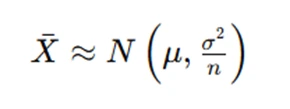
This concept forms the basis for numerous STAT2001 assignment questions involving large-sample approximations and inferential procedures.
Students are often asked to:
- Derive sampling distributions
- Apply the Central Limit Theorem
- Calculate standard errors
- Evaluate approximation accuracy
- Interpret sampling variability
Assignments frequently combine theoretical derivations with practical applications, requiring students to explain why the Central Limit Theorem can be applied in particular situations.
Because the theorem connects probability distributions to statistical inference, it becomes one of the most heavily assessed areas of the course.
Method of Moments Estimation Assignments
Parameter estimation is introduced through the Method of Moments, one of the earliest inferential techniques covered in STAT2001. Students learn how sample moments can be used to estimate unknown population parameters.
Assignment questions typically require students to:
- Derive sample moments
- Equate sample moments with theoretical moments
- Solve estimation equations
- Compare estimator performance
The focus extends beyond obtaining numerical answers. Students must demonstrate the derivation process clearly and justify the assumptions underlying their estimators.
Many coursework problems involve distributions not previously encountered, encouraging students to apply estimation principles rather than memorizing formulas.
Maximum Likelihood Estimation in STAT2001 Homework
Maximum Likelihood Estimation (MLE) is one of the most important topics in mathematical statistics. Students learn how likelihood functions are constructed and optimized to obtain parameter estimates.
Assignments frequently involve:
- Constructing likelihood functions
- Computing log-likelihood functions
- Differentiating likelihood expressions
- Solving likelihood equations
- Verifying maximum conditions
Students often find MLE assignments challenging because they combine probability theory, calculus, and statistical reasoning.
The course expects students to derive estimators from first principles rather than applying pre-existing formulas. This mathematical emphasis distinguishes STAT2001 from introductory applied statistics courses.
Many examination questions require students to derive MLEs under time constraints, making repeated practice essential for mastery.
Confidence Interval Construction and Interpretation
Confidence intervals provide a framework for quantifying uncertainty in parameter estimates. STAT2001 explores both the construction and interpretation of interval estimates.
Students encounter assignments involving:
- Confidence intervals for means
- Confidence intervals for proportions
- Confidence intervals for variances
- Large-sample approximations
The mathematical derivation of interval estimators receives significant attention. Students must understand the probabilistic reasoning underlying confidence levels and sampling variability.
Assignments often require interpretation of interval estimates within practical contexts, ensuring that students can connect theoretical results with real-world decision-making.
Hypothesis Testing Problems in STAT2001
Hypothesis testing forms a major component of STAT2001 assessment. Students learn how statistical evidence is used to evaluate competing claims about population parameters.
Key assignment topics include:
- Null and alternative hypotheses
- Test statistics
- Rejection regions
- p-values
- Type I errors
- Type II errors
- Statistical power
Students must understand not only how to perform calculations but also how to justify testing procedures and interpret results.
Many homework questions require the derivation of test statistics and examination of their sampling distributions. Theoretical understanding is emphasized as strongly as computational accuracy.
Assignments frequently combine estimation and testing concepts, reinforcing the relationship between confidence intervals and hypothesis tests.
Developing Regression Analysis Skills Through Simple Linear Regression
Simple linear regression introduces students to statistical modelling using relationships between variables. This topic serves as a bridge between mathematical statistics and predictive analytics.
The central regression model studied in the course is:
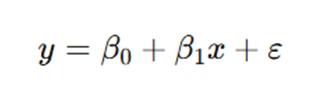
Assignment tasks commonly include:
- Estimating regression coefficients
- Interpreting slope parameters
- Evaluating model assumptions
- Constructing confidence intervals for coefficients
- Testing regression hypotheses
Students learn how least squares estimation relates to the inferential principles developed earlier in the course.
Many assignments require detailed interpretation of regression output alongside mathematical derivations. Understanding both perspectives is necessary for achieving strong assessment results.
Preparing for STAT2001 Mid-Semester Tests and Final Examinations
The course assessment structure typically includes assignments, a mid-semester examination, and a final examination. Earlier offerings included two assignments, a redeemable mid-semester examination, and a comprehensive final examination.
Success in assessment requires integration of multiple topics rather than isolated topic knowledge. Examination questions often combine probability distributions, estimation methods, sampling theory, and hypothesis testing within a single problem.
Students who perform well generally develop strong mathematical derivation skills, maintain consistent practice with theoretical questions, and understand the connections between probability theory and statistical inference.
Community discussions among ANU students frequently describe STAT2001 as one of the more mathematically demanding statistics courses, particularly because of its emphasis on proofs, derivations, and theoretical reasoning rather than routine calculations.